The new home construction landscape in Central Nebraska has shifted meaningfully over the past few years. The types of projects people are building, the features they are prioritizing, and the way they are thinking about their homes have evolved in response to changing family needs, rising material costs, and a broader appreciation for the rural lifestyle that defines communities like Burwell, Ord, Calamus, and Taylor.
This article examines what is actually happening on the ground, based on real project conversations between builders and families in the region, not national trend reports written for urban markets.
Shouses: The Combination Build Keeps Growing
The shouse, a combined shop and house under one roof, has been a fixture of rural Nebraska construction for decades, but demand has continued to grow, and the product has matured significantly. Modern shouses bear little resemblance to the utilitarian designs of a generation ago. Living quarters now routinely include vaulted ceilings, custom kitchens, premium flooring, and thoughtfully designed spaces that are indistinguishable from a well-built custom home connected to shop space that is serious, functional, and sized for real work.
The appeal is practical. Agricultural families, tradespeople, and rural households with recreational vehicles, boats, or equipment need dedicated workspace that is convenient, climate-managed, and close to where they live. A shouse delivers all of that under one roof at a total project cost that is often more efficient than building two separate structures. Most common shouse builds in the region run around 2,000 square feet of living space, though projects range from under 1,500 to 4,000 or more depending on need.
Barndominiums: The Aesthetic That Stayed
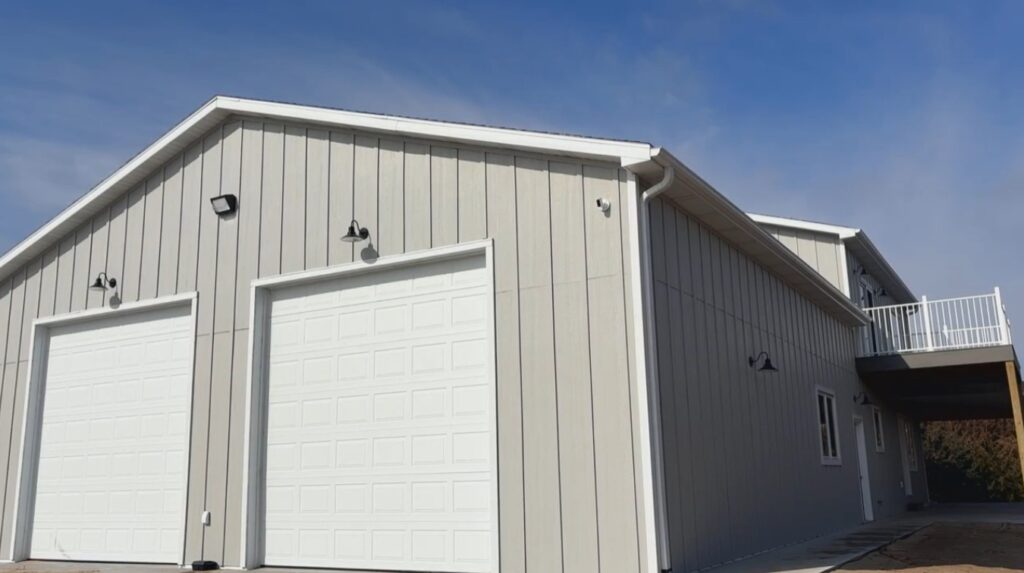
Barndominiums generated significant national media attention several years ago. Skeptics expected the trend to fade. It did not fade in Central Nebraska, where the post-frame construction method, open-span floor plans, and metal exterior aesthetic align naturally with the agricultural traditions of the region and the practical needs of rural households.
What has changed is the finish standard. Early barndominiums sometimes felt underdone as full-time living spaces. The current generation is fully finished — well insulated, mechanically complete, and comfortable year-round. Spray foam insulation in the building envelope is increasingly standard, which is critical for a structure that needs to perform in Nebraska winters. The building envelope is most often post-frame metal; the interior is a properly executed home.
The Trend Toward Smaller, Cozier Footprints
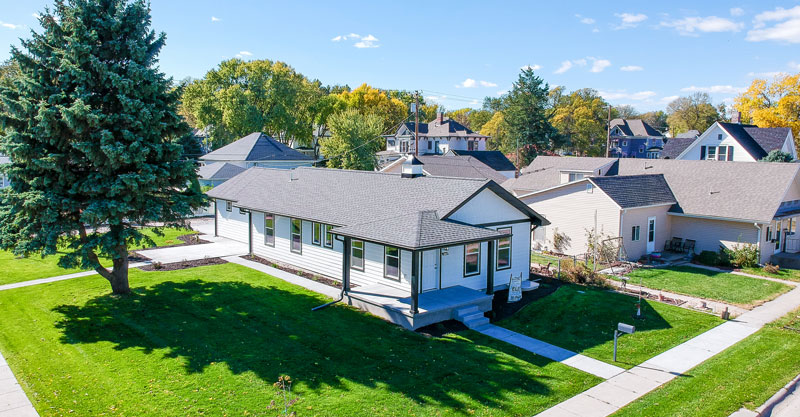
One of the more notable shifts in Central Nebraska custom home conversations is a move away from maximizing square footage for its own sake. Homeowners are increasingly interested in building right-sized homes that function well rather than large homes with rooms that never get used. Open concept living areas remain popular, but the emphasis has shifted toward quality of space rather than quantity.
This reflects a practical understanding of what it costs to build, heat, cool, and maintain a larger home over time. A well-designed 2,000 square foot home with premium finishes and excellent mechanical systems often serves a family better than a 3,200 square foot home with modest finishes that stretches the budget and strains the utility bill.
Energy Efficiency as a Baseline, Not a Bonus
Energy efficiency has moved from an optional upgrade to a baseline expectation in new construction across the region. Families are building tighter envelopes, specifying spray foam insulation systems, and thinking seriously about mechanical efficiency in ways they were not ten years ago. The motivation is practical — a well-insulated, properly air-sealed home in Nebraska’s climate costs meaningfully less to heat and cool every month for the life of the home.
LP siding has become the preferred exterior product for most custom builds, offering better moisture resistance and paintability than traditional wood products. For roofing, asphalt remains the reliable default. Metal roofing can work well, but quality matters — the hidden-fastener premium systems significantly outperform cheaper through-fastener alternatives over the long term.
The Addition Over the New Build
A significant trend in the region is the decision to expand an existing home rather than build new or move. Families invested in their land, their community, and their location are choosing to add what they need rather than start over elsewhere. This decision often makes strong financial and practical sense — an addition delivers the specific improvement needed at a fraction of the disruption and cost of a full build and move.
Primary suite additions are the most consistently requested addition type, running $150,000 to $250,000 in Central Nebraska depending on scope. Aging-in-place reconfigurations — moving laundry to the main floor, creating barrier-free bathroom access — are increasingly requested as homeowners plan long-term. Garage and shop additions, extra bedrooms, and sunrooms round out the most common requests.
Functional Design for Working Households
Central Nebraska families build homes designed for the way they actually live, not homes optimized for resale appeal to a generic buyer. That means generous mudrooms with boot storage, utility sinks, and durable flooring that can handle the reality of farm and ranch life. It means pantries and storage systems sized for households that stock food in quantity. It means garages and shops sized for actual equipment.
Current finish trends lean toward neutral colors — Agreeable Gray and similar tones remain popular — with stained wood making a comeback as an accent element on islands, range hoods, and open shelving. Fireplaces, both gas and electric, remain a highly requested feature. Onyx Collection products are popular locally for bathroom countertops and custom shower systems.
Elev8 Construction builds and remodels throughout Central Nebraska. If you are planning a project and want to talk with a builder who understands the region and where it is heading, reach out at elev8308.com or 308-346-4180.
Frequently Asked Questions
What is the most popular type of new home being built in rural Nebraska right now?
Shouses and barndominiums are consistently the most requested project types in Central Nebraska, driven by the region’s agricultural and recreational lifestyle. Custom stick-built homes on rural acreage remain strong as well. There is a growing trend toward right-sized homes in the 1,800 to 2,400 square foot range with high-quality finishes rather than maxing out square footage.
Are barndominiums still a good choice in Nebraska in 2026?
Yes, and the product has matured significantly. Current barndominiums are fully finished, well insulated with spray foam, and mechanically complete. They perform well year-round when built correctly.
What home additions are most popular in Central Nebraska?
Primary suite additions are the most consistently requested, typically running $150,000 to $250,000 depending on scope. Aging-in-place reconfigurations — moving laundry upstairs, creating barrier-free bathroom access — are increasingly common. Garage and shop additions, extra bedrooms, and sunrooms are also frequent requests from families who love their location but have outgrown their existing space.
What interior design trends are popular in Central Nebraska homes right now?
Neutral paint colors in Agreeable Gray or similar tones remain popular and have the advantage of longevity. Stained wood is resurging as an accent element on islands, range hoods, and open shelving. Fireplaces — both gas and electric — are highly requested. The Onyx Collection is widely used locally for bathroom countertops and custom shower systems. Open floor plans remain standard, but there is a notable trend toward cozier, more defined spaces over purely open layouts.
Why are Central Nebraska homeowners choosing additions over moving?
Families invested in their land, their community, and their specific location often find that a well-planned addition delivers exactly the improvement they need at a fraction of the total cost and disruption of selling, buying, and moving. In many rural communities, the available housing inventory does not offer what a targeted addition can provide. It is frequently the more financially practical and personally satisfying choice.