Building a custom home in Central Nebraska is one of the most rewarding things a family can do. It is also one of the most complex. Done well, you end up with a home built exactly to your life, your layout, your land, your priorities. Done without preparation, you face cost overruns, decision fatigue, and a process that feels out of control from the start.
This guide walks through the full arc of a custom home build in the region, from the first decisions to the day you get your keys. It is written for homeowners in communities like Burwell, Ord, Calamus, Taylor, and surrounding counties who are considering building and want to understand what the process actually looks like.
Step 1: Establish Your Budget Before Anything Else
Every expensive mistake in custom home building traces back to the same root cause: starting with design before having a clear budget. When you design first and price later, all too often you can fall in love with a plan and then face the painful reality that it costs more than you can afford. The redesign process is expensive in both money and emotional energy.
In Central Nebraska, a common custom home build can fall in the $600,000 to $700,000 range, though projects realistically run anywhere from $300,000 to well over $1,000,000 depending on size, finishes, and site conditions. The scope of what the builder is carrying, things like the lot improvements required (grading, well, utilities), and the finish and appliance package choices, can all be big cost drivers. Starting with a clear total budget rather than a per-square-foot guess changes every decision you make afterward.
Step 2: Financing Your Build
Financing a custom home is often different than purchasing an existing house. Many clients choose to use a construction loan, which is designed specifically for building projects. With this type of loan, funds are released in stages, called draws, as the project progresses through defined milestones such as foundation, framing, and completion. Once the home is finished, the loan typically converts into a traditional mortgage through what’s known as a construction-to-permanent loan.
That said, financing paths can vary. Some homeowners work closely with a trusted banking partner to structure a construction loan that fits their long-term financial goals. Others may choose to leverage land equity, portfolio lending options, or hybrid financing strategies depending on their situation.
And in some cases, especially with established landowners or clients transitioning between properties, projects may be cash funded, allowing for greater flexibility in timing and structure.
The key takeaway is that every build is unique, and the financing approach should be just as tailored as the home itself. Partnering early with a lender who understands construction, particularly rural or custom projects, can make the process smoother and help ensure the financial structure supports the vision for your home.
Step 3: Secure and Evaluate Your Land
If you do not already own land, acquiring the right parcel is your next step. In rural Nebraska, land evaluation goes beyond price per acre. Before committing to a parcel, understand the soil conditions for foundation and septic purposes, flood zone status, access and easement situations, distance from existing utility lines, and setback requirements for your county.
Knowing your lot’s unique benefits and drawbacks, confirming setbacks and any applicable covenants early prevents surprises later. These are easy to check and important to know before design begins.
Step 4: Choose Your Builder
Builder selection can carry with it some of the heaviest decision weight in the entire process. A design-build firm, one that handles both design and construction under a single roof, offers significant advantages for custom residential projects. The design is developed with real construction cost awareness, communication runs through a single team, and there is one point of accountability for the entire project.
When evaluating builders in Central Nebraska, prioritize local experience. A builder based in the region understands the local permitting landscape (comparatively relaxed in most rural counties), has established relationships with regional trade partners, and has built in the soil and weather conditions your project will face.
Step 5: The Pre-Construction Phase
Pre-construction is where the real work of a custom project happens, and it is the phase most homeowners underestimate. This phase covers the discovery meeting (aligning on vision, needs, and budget), collaborative design development using photo-realistic drafting tools, engagement with trade partners for accurate pricing, and finalization of the contract.
For a custom home in Central Nebraska, a well-structured pre-construction phase typically runs about six months, covering design, selections, and floor plan development. Rushing it produces plans that do not reflect the budget and contracts that leave important details undefined. A builder willing to invest this time upfront is giving you a genuine service.
Step 6: Design and Selections
The design phase transforms your vision into detailed blueprints. In a design-build model, this happens in close collaboration with your builder, with construction cost awareness built into every decision. You will make choices about floor plan layout, room sizes, window placement, roofline, exterior materials, and a long list of interior finish categories.
Finish selections, cabinetry, countertops, flooring, fixtures, appliances, and more, have a significant impact on final cost. A good design process treats the estimate as a living tool, showing you what different selections cost in real terms so you can make informed tradeoffs. Common trends in Central Nebraska currently include modern farmhouse aesthetics, premium cabinetry, luxury countertops, oversized shop and garage space, and fireplaces, both gas and electric.
Step 7: Timing and Seasonality
Nebraska’s construction seasons are real and should shape your planning. The best time to break ground on a new home is early spring, as soon as the frost is reliably out of the ground, typically around April. A well-organized local builder typically runs a limited number of build slots per season, staggering starts through the spring and summer. If you are planning to build, engaging your builder as soon as some of the initial steps have been completed to target a spring start is the most effective approach to securing a slot and getting through pre-construction in time.
Step 8: Construction
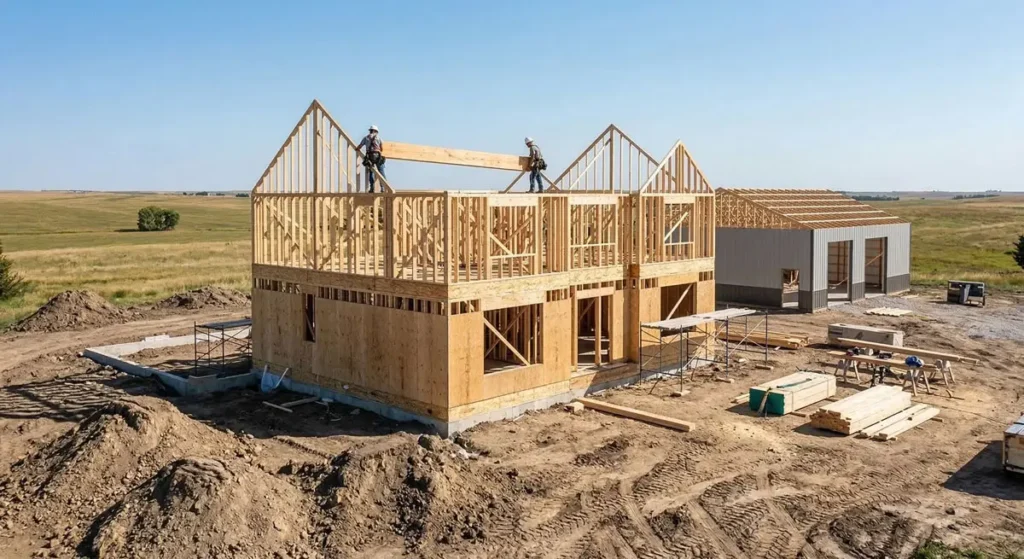
For a custom home in Central Nebraska, the construction phase typically runs 8 to 10 months from contract execution to move-in. This covers foundation, framing, rough mechanical installation, insulation, drywall, exterior finish, trim, cabinetry, flooring, plumbing fixtures, electrical finish, and final details.
A full-time project manager can be an extremely valuable asset coordinating the build and providing regular logs, photos, and site walk milestones keeps you informed and reduce surprises.
Step 9: Final Walkthrough and Move-In
As construction nears completion, you will want to do a final walkthrough with your builder to document any items that need to be addressed before closing, a punch list. A quality builder performs their own internal punch list before bringing you in for yours, then schedules a 90-day check-in and a one-year follow-up after move-in to proactively address anything that needs attention.
If you are planning a custom home in Central Nebraska and want to understand what this process looks like for your specific situation, Elev8 Construction would be glad to walk through it with you. Reach us at elev8308.com or call 308-346-4180.
Frequently Asked Questions
How much does it cost to build a custom home in Central Nebraska?
A custom home in Central Nebraska can fall in the $600,000 to $700,000 range, though we have seen projects run from $300,000 to well over $1,000,000 depending on size, finishes, and site conditions. A per-square-foot estimate is a rough starting point, not a final budget.
How long does it take to build a custom home in Nebraska?
From initial idea to move-in, a custom home in Central Nebraska typically takes 14 to 16 months. Pre-construction, design, selections, and pricing runs about 6 months. Construction itself runs 8 to 10 months. The best time to break ground is early spring, so engaging your builder as early as possible for a spring start is the most effective approach.
When is the best time to start building a home in Nebraska?
Early spring is the optimal time to break ground in Nebraska, as soon as frost is reliably out of the ground, typically April. Most local builders run a limited number of build slots per season starting in April and staggering every couple of months through summer. Engaging your builder as soon as possible gives you time to complete pre-construction before the spring build window opens.
What is a construction-to-permanent loan in Nebraska?
A construction-to-permanent loan finances both the build phase and the permanent mortgage in a single product. During construction, funds are released in draws as milestones are reached. Once the home is complete and appraised, the loan converts to a standard mortgage. Local lenders are often the best starting point for rural Nebraska construction financing.
What are the most popular custom home styles in Central Nebraska?
Modern farmhouse aesthetics, barndominiums, and shouses dominate new construction in Central Nebraska. Common feature requests include oversized garage and shop space, premium cabinetry, luxury countertops, fireplaces, and open living areas. There is currently a trend toward slightly smaller, cozier footprints rather than maximizing square footage for its own sake.