Buying land to build on is not the same as buying a lot in a subdivision. In Central Nebraska, most residential land purchases involve rural acreage where utilities may not exist, access may depend on an easement, and what you can build is shaped by factors that are not always obvious until you have already made an offer.
Getting the land decision right before you buy is significantly easier than correcting a problem after closing. This article covers the questions worth asking and the factors worth investigating before you commit to a piece of ground in Central Nebraska.
Access and Road Conditions
How you get to the property and what condition the road is in matters more than many buyers initially consider. A private gravel road that looks passable in dry weather may become impassable during spring thaw or a wet fall. Construction equipment, concrete trucks, lumber deliveries, and heavy equipment all require reliable access. If a delivery cannot reach your site, your build schedule suffers.
If access to the property depends on a road or driveway that crosses someone else’s land, you need a legal easement documented and recorded before you buy. A verbal agreement with a neighbor is not adequate protection. If the property changes hands or the relationship changes, a verbal easement is worth nothing.
Ask specifically whether the access road is county-maintained or private. County-maintained roads are generally more reliable in terms of grading and snow removal. Private roads are the owner’s responsibility, which means they are your responsibility after closing.
Utilities: What Is There and What Is Not
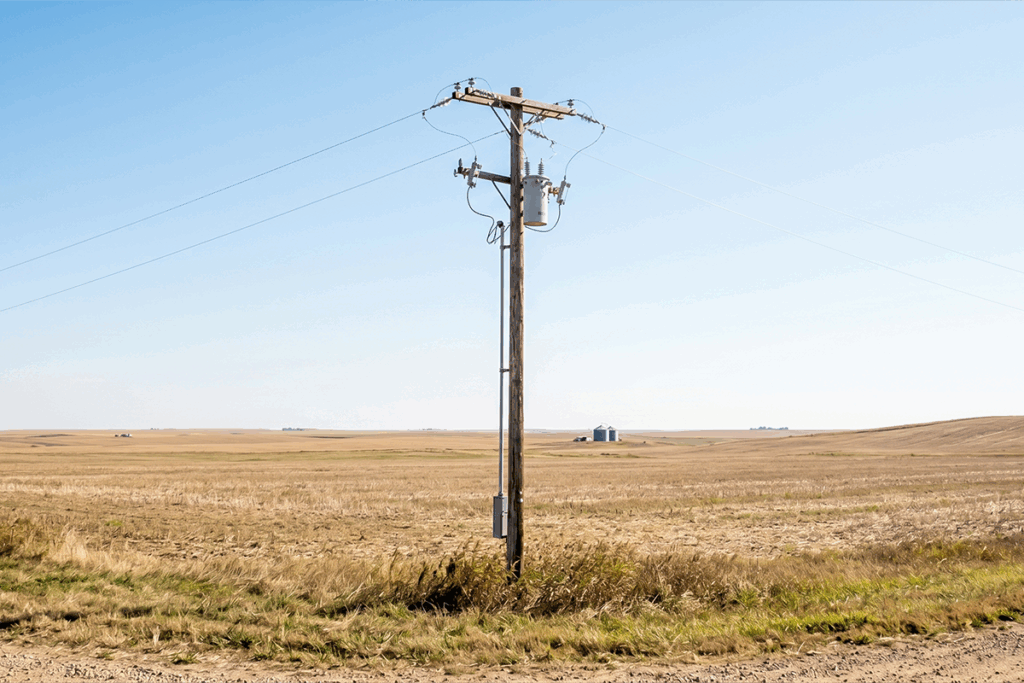
In a rural Central Nebraska setting, the utility situation on a property can vary considerably. Some parcels have electrical service at or near the property line. Others require a service extension that can cost several thousand to tens of thousands of dollars depending on distance.
Water and sewer are usually the homeowner’s responsibility in rural areas. A well and septic system are standard for most rural builds in this part of the state. The cost of drilling a well depends on the depth required to reach a reliable aquifer, which varies by location. The cost of a conventional septic system depends on site conditions and soil percolation. A site with poor soil drainage may require an engineered or mound-style system, which costs more and requires more land area.
Before closing on a rural property, ask the seller about any existing utilities and their condition. If there is an existing well, request documentation of water quality testing and pump performance. If there is an existing septic system, ask about its age, capacity, and maintenance history. Replacing or upgrading these systems after closing is not cheap.
Soil Conditions and Site Topography
The soil on a property affects several things that matter to a builder: what kind of foundation is appropriate, how the septic system can be designed, and how much site grading will be required.
Expansive soils — soils with high clay content that swell when wet and shrink when dry — can create long-term foundation movement issues if not accounted for in the structural design. Sandy or poorly compacted soils may require engineered fill or specialized foundation systems. Most of Central Nebraska has workable soil conditions, but it varies by site.
Topography affects drainage, which in turn affects where a home can be sited, where a septic system can be located, and how much grading work will be required before construction can begin. A site with significant drainage challenges — one that sits in a low area, has seasonal water pooling, or is in a documented floodplain — requires more careful engineering and can add cost.
Floodplain Status
Properties in FEMA-designated floodplains are subject to requirements that affect both construction and financing. Flood insurance is required for homes in certain floodplain zones, and that insurance can be expensive on an ongoing basis. Construction in a floodplain may require the finished floor elevation to be above the base flood elevation, which affects foundation design and cost.
Floodplain status is publicly available through FEMA flood maps. Check the FEMA Flood Map Service Center for any property you are seriously considering, particularly properties near rivers, creeks, or low-lying areas. The Calamus River and its tributaries run through parts of Loup County; similar considerations apply to other waterways in the region.
Covenants, Restrictions, and Zoning
Not all rural land in Nebraska is unrestricted. Some properties are subject to deed covenants that limit what can be built, what it can look like, or what activities are permitted. Subdivision covenants are common in developed rural areas and can restrict everything from building size and materials to the number of outbuildings allowed.
County zoning applies in most Nebraska counties, though the rules vary. Agricultural zoning typically allows residential construction but may have minimum acreage requirements or restrictions on the number of structures on a parcel. Some counties have more detailed rural residential zoning with specific setback requirements for structures, septic systems, and wells.
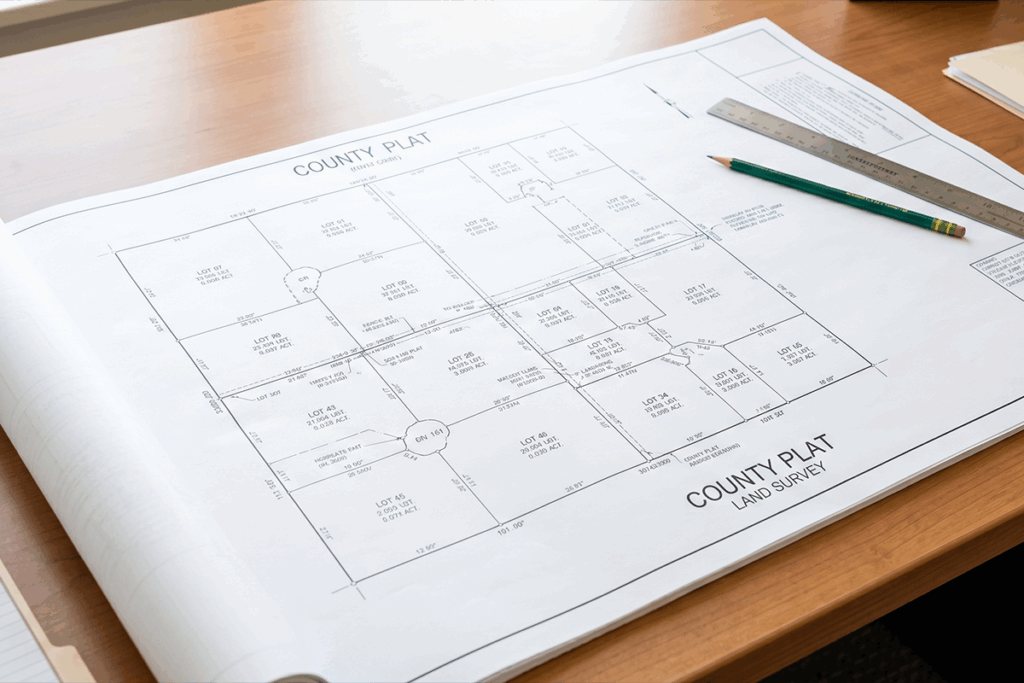
Before closing, ask for a title report that includes any recorded covenants or easements on the property. Review those documents carefully. If you have questions about what is permitted, contact the county planning or zoning office directly — they are generally accessible and willing to answer straightforward questions about what a specific parcel allows.
Permitting in Rural Nebraska
One of the practical advantages of building in rural Central Nebraska is a relatively light permitting environment. Most counties in the region require simply filing building permits for residential construction vs longer drawn out processes in larger metros. Also worth noting is that inspections overall are not required during the building process except for a few trades, with electrical work being the primary exception — electrical inspections are standard even in areas without broader building inspection requirements.
This is meaningful for homeowners in that it simplifies the preconstruction process and reduces administrative overhead. It also puts more weight on the builder’s judgment and standards, since the formal inspection process that enforces code compliance in urban markets is largely absent. Choosing a builder who applies professional standards regardless of whether an inspector will check the work is more important here than in markets with rigorous inspection regimes. Hiring someone you trust is vital.
Frequently Asked Questions
How much does it cost to extend electrical service to a rural Nebraska property?
The cost depends on the distance from the nearest service point and the utility provider. Short extensions of a few hundred feet may cost a few thousand dollars. Longer extensions over a mile or more can cost significantly more. Contact the local rural electric cooperative or utility provider early in the process to get a realistic estimate.
What is a deed restriction and how does it affect what I can build?
A deed restriction is a legally recorded limitation on how a property can be used or what can be built on it. They are common in rural subdivisions and can restrict building size, materials, number of structures, and permitted uses. Deed restrictions run with the land and bind all future owners, so reviewing them before purchase is essential.
Can I build a shouse or barndominium on any rural property in Central Nebraska?
Generally yes, but covenants, zoning, and setback requirements can affect this. Some rural subdivisions restrict metal building aesthetics or require certain exterior materials. County zoning may have requirements around structure setbacks from property lines or roads. Verifying what is permitted on a specific parcel before designing a shouse is good practice.
Should I hire a surveyor before buying rural land?
If the property boundaries are not clearly marked or if there is any uncertainty about what is included in the sale, a survey is worth the cost. Surveys typically run a few hundred to a few thousand dollars depending on parcel size and complexity. Discovering a boundary issue after closing is significantly more expensive to resolve than preventing it before.